
The Boring Secrets Behind Building A Successful Web3 Community

I write this while I have been in the middle of writing for another topic on Boringly, when I received a call from a Friend building a good vc funded product but struggling to create a community. Having built strong communities for the past 8 years, I was able to give him a playbook over a 10 minute call and realised it deserved a spot on Boringly, with criticisms and feedback welcomed ofcourse. If you’re building a protocol and want to start building or expanding your community, then this is for you.
So let’s start with a simple exercise. Before building any community, we obviously need to categorise our product into the kind of audience we’re looking for. It doesn’t work like it does in Web2, if you’re building a web3 community you can’t think about borders in your first phase unless its a regional product or protocol. Here is how to get started:
1. Identify Stage
First of all, identify the stage of your product. Who is going to be your initial community?
- if you are building in public; its going to be the users who watch your journey
- if you’re building in stealth; then it’s going to be the vcs, other project founders, mentors, or any one you can find
- if you already have initial traction (either from users or funding), whats your current target? is it to get to the funding stage, or users, or both?
2. Accurate Messaging
You’ll be tempted to flex how your technology is so good for the decentralized work while that might not work for end user, it would work for your funding stage.
- if you’re on the funding or initial testing stage where you send out the product to be tested and reviewed by peers who understand, focus on your messaging clearly outlining what does the mvp do ~ and how is it supposed to be on the final stage.
- if you’re on the stage to attract users, and wider community, you need to simplify messaging.
Simplify Messaging
To appeal to the masses, try to put what the product does in the simplest from. Simple does not mean transforming the meaning into a simpler example, it simply means straight-forward and simple without changing or simplifying the meaning of what you’re building. Remember, you don’t have to simplify the meaning, you’ve to simplify the messaging.
3. Ecosystem Positioning
Whichever category your product is positioned in, your focus should be to get there on the map as soon as possible. But how do you do that?
Ecosystem partnerships. If you’re building on top of an L1 or L2 Blockchain, partner up with the network and the top protocols on the network, planning AMA spaces together, with a PR release of the integration and partnership, etc. If you’re yourselves building an L1/L2/Infra, partner with other infra providers that you’re building with.
Ecosystem Map. Whichever category you’re in, you should be the talk of the town among top voices in the ecosystem, presence in IRL events & more
4. Culture
What Culture Actually Is (in Web3 terms)
Culture in Web3 =
the shared behaviors, beliefs, language, and inside jokes that make your community feel like a tribe instead of a Telegram group.
Culture shows up in:
the memes your community uses
the vocabulary they adopt
the rituals or weekly rhythms
the heroes and villains they create
the way new people are welcomed
the energy they project on X
the collective belief that “we’re building something meaningful”
Culture isn’t what you say as a founder.
It’s what your users say to each other when you’re not in the room.
Why Culture Is a Superpower in Web3
Culture does what incentives can’t:
1. Culture is self-propagating
Airdrops require budgets.
Marketing requires spending.
Culture requires momentum.
People spread culture because it feels good, not because they’re rewarded. Think of it as a shared consciousness, believing in the way the project is represented, how it communicates, how it treats its users and community, & how resonating with it gives users a purpose.
2. Culture creates identity
Users don’t stick for tokens.
They stay because they feel like they belong.
3. Culture defends the narrative during downturns
When the chart dies, only culture survives.
This is why DeFi, Solana, and Bitcoin communities stayed strong even during multi-year winters.
4. Culture turns strangers into contributors
When people feel “part of something,” they naturally:
answer questions
help newcomers
create memes
engage
test features
defend you publicly
No bounty required.
How Culture Is Formed
Culture doesn’t come from branding decks or mission statements.
It comes from consistent signals from the founders.
These are the four things that shape culture:
a) Your narrative
Your core message becomes the lens the community sees everything through.
b) Your behavior as a founder
Founders set the emotional tone.
If you communicate simply → community speaks simply
If you overreact → community becomes chaotic
If you stay calm in chaos → community becomes resilient
Culture follows the founder.
c) The early users you attract
Your first 500 users decide the personality of your entire community.
If they are builders → your culture becomes builder-heavy
If they are degens → your culture becomes degen
If they are investors → culture becomes analytical
Choose early users intentionally.
d) The rituals you create
Culture needs rhythm.
weekly updates
monthly AMAs
contributor calls
meme competitions
leaderboard moments
on-chain “seasons”
lore drops
These recurring events create predictability, which creates identity, which creates culture.
The Biggest Mistake Founders Make: Manufacturing Culture
You can’t force culture by saying:
“Join this Discord”
“Say Gm”
“Participate in this event”
“Share this meme”
Culture is not a task list.
Culture is a reflection.
It forms naturally when your narrative, users, rituals, and founder energy align.
The Boring Truth About Culture
Most teams treat culture like an afterthought — something that happens post-launch.
But in reality:
Your community is the product, and culture is the engine that keeps it alive.
You can’t scale a cult-like community without culture.
You can’t survive a bear market without culture.
You can’t grow from 10,000 to 100,000 users without culture.
Culture is the difference between a community that lasts 3 months and one that lasts 3 cycles.
5. Getting Users
The most crucial part of building your community is getting users. Your initial users could become your community eventually or vice-versa.
There are multiple models projects choose to acquire users, lets try and study some of the models.
a) Product-first Users
Early adopters who join because the product solves their problem. These are the users who show up for one reason: your product solves a problem they already have.
They’re here because the product works.
And boring as it sounds, this is the only user segment that sticks, no matter what the market does.
Product-first users are slow to acquire, but they are the foundation of any protocol with long-term survival.
Here’s why they matter:
They learn the product without incentives.
They give real feedback instead of farming.
They become the first “advocates” because they believe in the product, not the token.
They survive bear markets because they don’t view the protocol as a trade — they view it as a tool.
In 8 years of building communities, I’ve realised something:
If the product doesn’t matter to anyone, no amount of marketing can manufacture a community.
You can’t market your way out of a product that doesn’t solve a problem.
And you don’t need marketing to get the first 50 real users if it does.
Product-first users usually appear in three conditions:
Your product solves a pain point (immediate value).
Think: faster, cheaper, simpler, more accessible, more transparent.The onboarding is so simple that people don’t need a tutorial.
If you need a 6-minute guide, you’ve already lost half of them.The product actually works.
No bugs, no broken flows, no missing features that block the core experience.
This is the most overlooked user segment in Web3 because it’s not flashy.
There’s no big announcement, no spike in dashboard numbers, no “community explosion.”
It’s boring.
Which is why it works.
Product-first users are the ones who quietly use your protocol in the background, invite two friends, write a small thread, drop feedback in the Discord, and slowly build the cultural DNA of your community.
Everyone wants 100,000 users.
But the truth is:
If you build for 100 product-first users, you’ll eventually get the 100,000.
If you build for 100,000 airdrop users, you won’t even keep the first 100.
To get to first 100 users of these categories, you could start with gated access (for eg. Base App). There are countless more examples and different models that can be applied, you should try to recognize your stage and then get to users, one at a time. The first 100 users that you build this way will give you deeper insights into your product market fit than 100k users who are just farming.
b. Ecosystem Users
If product-first users are your foundation, ecosystem users are your accelerant.
They come from the networks, chains, and infra layers you build on top of, and in Web3, ecosystems are often more powerful than individual projects.
Every L1/L2, every rollup, every infra provider has a built-in user base:
developers, founders, validators, traders, ambassadors, and early adopters.
When you integrate into an ecosystem, you tap into all of that instantly.
The mistake most founders make is assuming ecosystems will notice their project automatically.
They won’t.
You have to insert yourself onto their radar and get on the map → clearly, consistently, and early.
Ecosystem users come from three intentional actions:
1. Integrate early and tell a clear story.
If you’re building on Solana, Base, Arbitrum, or any L2 —
your first goal isn’t “launch.”
It’s: “How do we become part of this ecosystem’s daily conversation?”
That means:
showing how your product adds value to the chain,
why your product belongs there, and
what problem you solve for their users.
If you do this well, ecosystem teams will amplify you themselves. Participate in AMAs with thought leaders and founders in the relevant ecosystem, add value to others in the ecosystem, yap often.
2. Partner with the top protocols in your category.
Every ecosystem has “gravity centers”:
DEXs, bridges, liquid staking apps, wallets, or leading infra tools.
When you integrate with them, you inherit their trust and user flow.
You don’t need 20 partnerships.
You need 2 or 3 high-signal ones that your whole category recognizes.
Partnerships won’t give you millions of users, but they’ll give you something more important:
context.
They place your project on the map.
3. Show up physically — ecosystems still reward presence.
show up at IRL events, speak at hackathons to get noticed, spend time with ecosystem teams to get support.
c) Narrative Users
Narrative users are the people who join not because of incentives, or product features, or partnerships, but because they believe in the story.
And in Web3, story is often the most powerful distribution engine.
Bitcoin grew because of a narrative:
“Money no one can control.”
Ethereum grew because of a narrative:
“Programmable finance.”
Solana grew because of a narrative:
“A fast blockchain.”
None of these stories were complicated.
They were simple, repeatable, and easy to spread.
And because of that, they created movement-scale users, people who didn’t just use the product, but represented it.
Narrative users behave differently from all other user types:
They don’t need a tutorial — the story is their onboarding.
They don’t leave during downturns — narratives survive cycles.
They bring more people — belief spreads faster than incentives.
They defend the project — narratives create identity.
They’re not joining because they tested your dApp or read your docs.
They’re joining because they want to be part of a mission.
This is why every great protocol has meme power:
not the funny memes, but the conceptual ones —
the kind that sit in your head and make sense instantly.
Narratives are the emotional layer of Web3 adoption.
They convert faster than ads,
retain longer than airdrops,
and scale deeper than ecosystems.
However,
Narratives don’t come from marketing.
They come from clarity.
When a founder understands exactly what they’re building and why it matters, the narrative forms on its own. Some founders would try to chase a narrative just because its hot, or force a narrative onto their product thinking its marketing, but its not.
People don’t follow features — they follow meaning.
And meaning spreads.
Quietly, then quickly, then overwhelmingly.
Narrative users are the reason some projects become movements.
Not because the tech is better, but because the story is clear enough to belong to everyone.
d) Speculative Users (For Projects with Tokens or Plans to issue one)
Note: This is not encouragement to issue a token, airdrop, or public round; it’s simply an explanation of how speculative users behave as per observations.
Airdrop
Airdrops are the default growth hack in web3, but most teams treat them as a one-time lottery instead of a long-term community funnel. Most of the time Airdrop doesn’t bring you real long-term users, but if done right, airdrops help you buy attention, then convert a slice of that attention in to real users and contributors.
First, define who the airdrop is for:
Early testers who already use the product.
Ecosystem-native users (e.g., people active on your L1/L2 or in adjacent protocols).
Completely new wallets you want to pull into the ecosystem.
Then design the airdrop backwards from the behavior you want:
If you want real usage, reward actions that are product-native (swaps, mints, governance votes, referrals, liquidity)
If you want a strong core community, over‑index rewards to people who stick around: repeat usage, long-term holding, past on-chain plus off-chain contributions from the users in the ecosystem.
Some practical principles:
Don’t overpay farmers. Use sybil filters, caps, and tiered rewards so one person can’t extract outsized value for low effort.
Make the rules brutally clear before the snapshot. Confused users don’t become loyal users.
Treat the airdrop as the start of a relationship, not the end. Push people toward the next action: quests, governance, contributor programs, or deeper product usage.
Airdrops can give you numbers on a dashboard very quickly. Your job as a founder or community lead is to design them so those numbers can turn into a durable community instead of a one-week hype spike.
⚠️ Why airdrops often backfire — the “airdrop farmer” problem & dilution risk
The new empirical work (2312.02752v3) introduces a sobering reality: many large-scale airdrops end up with a “substantial portion of tokens … sold off by ‘airdrop farmers’,” meaning people who participate just to get free tokens — not to use the product or contribute to community. arXiv
This leads to several structural problems:
Short-term incentives over long-term value — many recipients dump tokens soon after listing, creating sell pressure, token price decline, and often leaving little real usage or community growth behind. Outlook India+2Outlook India+2
Superficial community, not committed community — airdrop-driven users tend to behave as speculators rather than engaged participants; they might not use the product, contribute feedback, or stick around. Mitosis University+2arXiv+2
Dilution and inflation risk — giving away tokens can increase circulating supply rapidly without corresponding growth in demand or utility. That mismatched supply-demand dynamic can depress token value and harm long-term trust. Outlook India+1
Sybil / “hunter” exploitation — many airdrops are gamed by users opening multiple wallets or using scripts/bots to maximize claim — undermining genuine distribution and community fairness. arXiv+1
In short: while airdrops can generate noise and numbers, they rarely guarantee stickiness, engagement, or real community — unless carefully designed.
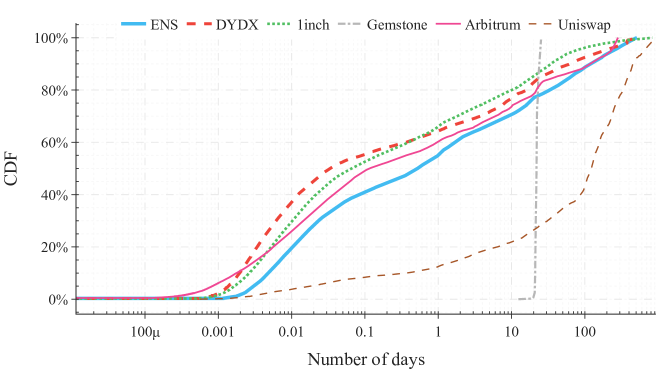
Airdrops feel like “free money,” but the data shows they mostly turn into exit liquidity, not lasting users. The paper Airdrops: Giving Money Away Is Harder Than It Seems analyzes six major airdrops (ENS, dYdX, 1inch, Arbitrum, Uniswap, plus a fake Gemstone drop) and finds that a large share of the tokens are quickly sold on exchanges, often within just one or two transfers after they hit wallets. In some cases over 80–95% of recipients end up routing tokens to exchanges, and many stop using the protocol shortly afterwards.
🧰 How to Use Airdrops the Right Way
If your web3 project decides to use airdrops, treat them not as a “quick-growth hack,” but as a strategic tool, and follow some guardrails:
Align airdrop criteria with activity, utility, or engagement — not just wallet ownership. For example: early users who interact meaningfully, testers, feedback providers, liquidity providers, etc. This reduces “airdrop hunting.”
Space out airdrops / use multi-round or milestone-based airdrops — avoids dumping, encourages long-term participation, and rewards continued engagement rather than one-time signups. This aligns with insights from dynamic-airdrop research. Outlook India+1
Communicate clearly to recipients what you expect: use the product, participate, contribute — don’t treat them like token-holders, treat them like early collaborators.
Design tokenomics to limit inflation / dilution — avoid oversupplying tokens upfront; ensure vesting, lock-up periods, and utility to maintain medium-term stability.
Be transparent and honest with the community — if drop is meant to bootstrap user base, say so; if meant to decentralize governance or ownership, be explicit.
My Take: Airdrops as a Last-Resort Trigger, Not Starting Gun
For many web3 founders, airdrops feel like a “free launchpad.” But as evidence shows, if your base isn’t strong, if there’s no real product, no engagement, no clarity — airdrops only bring noise and short-term speculators.
Airdrops should be the occasional trigger, not the baseline strategy.
They can work, but only if your foundation is solid: simple messaging, real utility, clear value proposition, and a commitment to building community, not just holders.
Public Rounds
Over the last few years, projects have experimented with dozens of public round structures.
Here are the public-round approaches that have consistently shown stronger results (in terms of acquiring community):
1. LP-Locked Raises at Low FDV
A significant portion of raised capital is locked directly into liquidity pools at a low FDV with no airdrop, no free CEX allocations, & transparent unlocks.
This gives users confidence that:
the team isn’t dumping,
liquidity is deep from day one,
there is no free token holder
and the token isn’t launched at inflated valuations.
This model isn’t new, but it remains one of the most community-trusted approaches.
2. Transparent, On-Chain Fund Locks (MetaDAO)
Models like MetaDAO introduced a new level of transparency:
team wallets locked on-chain,
contributor funds with public vesting,
and all treasury movements verifiable in real time.
This reduces the uncertainty around mismanagement and aligns builders with the community over the long term.
3. Community Rounds at the Same Valuation as VCs
A newer model adopted by several VC-backed launchpads:
allowing the public to invest at the same valuation as the last VC round, not a markup.
This works because:
users feel they are treated fairly,
it removes the “VC buys cheap, public buys expensive” resentment,
and it increases long-term belief in the project’s integrity.
Fairness = trust.
And trust = community longevity.
4. “Marketing Public Rounds” (Small, Low-Valuation, Oversubscribed)
Some teams run intentionally small public rounds at a low valuation.
Purpose:
create tension,
trigger oversubscription,
and use that momentum as part of launch marketing.
This model isn’t about capital — it’s about social proof:
“People are fighting to get in, so this must be good.”
When executed carefully (not greedily), this can generate strong early brand energy.
Trading Community
I’m not the strongest voice on trading communities, but one pattern is obvious:
trader communities form around the type of trader — not the type of project.
Medium-to-high risk traders look for:
deep liquidity
trending narrative or catalyst
a clean dip to accumulate
technical indicators lining up
volatility they can exploit
For these people, the project is a trade, not a belief system.
The community forms around opportunity.
Their participation is fast, reactive, and driven by market structure.
This isn’t bad, it’s just a different kind of community with a different purpose.
You don’t “retain” traders; you attract them when your token becomes interesting.
Holders Community
Holders are the opposite side of the spectrum.
They’re not here for the trade — they’re here for the thesis.
Holders come from:
belief in the mission,
belief in the team,
belief in the problem you’re solving, and
belief that your token will matter long-term.
These users look at fundamentals:
deep treasury reserves
runway
buyback mechanisms when needed
revenue
or a strong enough alternative model to justify low revenue early on
This community scales slowly, but it compounds.
Holders form the cultural backbone of your ecosystem — they defend, educate, explain, and stay through drawdowns.
Traders move with momentum.
Holders stay for conviction.
Hope you liked the article, if there is anything that you wish to add, please write to: mailingboringly@gmail.com
Disclaimer
The content shared in this article is for informational and educational purposes only and reflects personal opinions based on experience. It should not be interpreted as financial advice, investment guidance, legal advice, or a recommendation to buy or sell any asset or token.
Any strategies, examples, or models discussed are descriptive, not prescriptive, and may not be suitable for all projects or circumstances.
Readers should conduct their own research and consult qualified professionals before making any decisions related to investments, token design, fundraising, community-building, or regulatory matters.
Web3 markets are volatile, experimental, and carry significant risk.
Nothing in this publication constitutes an offer, solicitation, or endorsement of any project.
Boringly assumes no responsibility for any actions taken based on the information contained herein.
The part about categorizing your product by audience is so cruical. It's reminiscent of how I select books, matching themes to my current interests. This clear-eyed focus is incredibly insightful.